Can a Cavity Heal on Its Own? What Happens If You Don't Treat It?
Date : 21 Aug, 2026
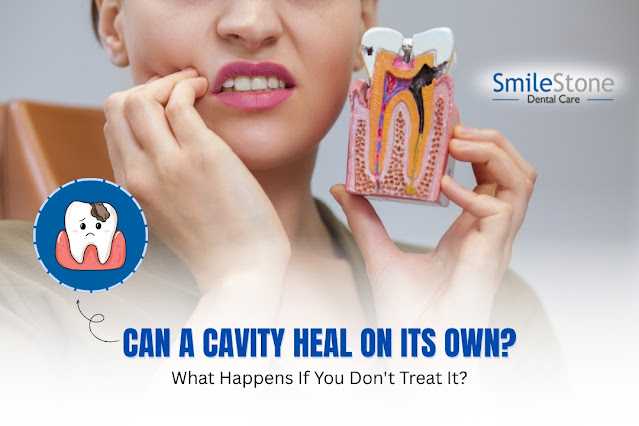
A small cavity may not seem like a serious problem, especially when there is no pain. Many people notice a tiny dark spot on a tooth or mild sensitivity and decide to wait. Sometimes, the discomfort disappears, and it feels like the problem has gone away.
But does that mean the cavity has healed?
Usually, no. A cavity that has already created a hole or permanent damage in the tooth cannot repair itself naturally. However, very early tooth decay can sometimes be stopped or reversed with proper oral care and fluoride before a cavity forms.
Understanding the difference between early tooth decay and an actual cavity can help you protect your natural teeth and avoid complicated dental treatment later.
What Exactly Is a Cavity?
A cavity is a damaged area in a tooth caused by tooth decay. It develops when bacteria in dental plaque feed on sugars and produce acids that gradually weaken the tooth's enamel.
In the beginning, this process may cause mineral loss without creating a visible hole. At this stage, the damage may sometimes be reversed with good oral hygiene, fluoride, and changes in eating habits.
Once decay progresses through the enamel and forms a cavity, however, the damaged tooth structure cannot simply grow back.
This is why regular check-ups at the best dental clinic in Nagpur can be valuable. A dentist may identify early decay before it becomes painful or requires extensive treatment.
Can an Early Cavity Heal Naturally?
This depends on what you mean by a "cavity."
If the tooth is only showing early demineralisation, the process can sometimes be stopped or reversed. Saliva naturally supplies minerals to the teeth, while fluoride helps strengthen enamel and make it more resistant to acid attacks.
At this stage, your dentist may recommend:
-
Brushing twice daily with fluoride toothpaste
-
Cleaning between your teeth every day
-
Reducing frequent sugary snacks and drinks
-
Drinking plenty of water
-
Using additional fluoride products when recommended
-
Maintaining regular dental check-ups
But if a physical hole has already developed, home remedies cannot rebuild the missing tooth structure.
Why Does a Cavity Sometimes Stop Hurting?
This is one of the most confusing things about tooth decay.
A cavity can become painful and then seem to feel better. That does not necessarily mean the tooth has recovered.
Tooth decay can progress gradually. When the decay reaches the deeper layers of the tooth, the nerve may become irritated and cause pain. In more advanced cases, the nerve can become severely damaged or lose its vitality, and the pain may temporarily disappear.
Unfortunately, the underlying infection or damage may still be present.
So, if your tooth suddenly stops hurting after a period of severe pain, don't assume everything is fine. A dental examination is still important.
What Happens If You Leave a Cavity Untreated?
Ignoring a cavity gives the decay more time to progress.
The problem can move through different layers of the tooth:
Enamel → Dentin → Pulp → Surrounding tissues
Once decay reaches the dentin, sensitivity may become more noticeable. If bacteria eventually reach the pulp, where the tooth's nerves and blood vessels are located, the tooth may develop significant inflammation or infection.
At that point, a simple filling may no longer be enough.
Can an Untreated Cavity Cause Toothache?
Yes. Toothache is one of the most common warning signs of advanced decay.
You may notice pain when:
-
Eating something sweet
-
Drinking something cold or hot
-
Chewing food
-
Biting down
-
Lying down at night
Some people experience a sharp pain, while others describe a dull or throbbing discomfort.
The type and severity of pain can vary, so it is not possible to determine the extent of decay based on pain alone.
.png)
What If the Infection Reaches the Tooth Nerve?
When decay reaches the pulp, the tooth may require root canal treatment to remove the infected tissue and preserve the tooth.
Without appropriate treatment, infection can spread beyond the tooth and cause an abscess.
Possible signs of a dental infection include:
-
Facial or gum swelling
-
Severe toothache
-
Pus around the tooth
-
Bad taste in the mouth
-
Fever
-
Pain while chewing
-
Swollen lymph nodes
These symptoms should not be ignored. A dental infection requires professional evaluation and treatment.
Can a Cavity Cause Bad Breath?
It can.
Decayed teeth can trap food particles and bacteria, contributing to unpleasant breath. However, bad breath can have many other causes, including gum disease, poor oral hygiene, dry mouth, and certain dietary habits.
If persistent bad breath continues even after brushing and cleaning your tongue, a dental check-up can help identify the underlying cause.
Does Every Cavity Need a Filling?
Not necessarily.
The treatment depends on how advanced the decay is.
Very early decay: The dentist may recommend fluoride, improved oral hygiene, dietary changes, and monitoring.
Established cavity: A filling may be required to remove the damaged portion and restore the tooth.
Deep decay: If the pulp is affected, root canal treatment may be necessary.
Severely damaged tooth: In some cases, extraction may be the only practical option.
This is why early diagnosis matters. The sooner a cavity is identified, the more likely it is that the treatment will be simple.
Why Do Some People Get Cavities More Often?
Cavities don't develop for just one reason. Several factors can increase the risk.
These include:
-
Frequent consumption of sugary foods and drinks
-
Poor brushing habits
-
Not cleaning between teeth
-
Dry mouth
-
Acidic foods and beverages
-
Certain medications
-
Deep grooves in teeth
-
Previous history of tooth decay
Genetics and individual oral conditions can also influence cavity risk.
Rather than blaming yourself for getting a cavity, focus on understanding your risk factors and improving your daily dental routine.
How Can You Prevent Cavities From Getting Worse?
The good news is that there are several simple things you can do to protect your teeth.
Brush your teeth twice a day using fluoride toothpaste. Clean between your teeth daily because toothbrush bristles cannot effectively reach every area. Try to limit frequent snacking on sugary foods, and choose water instead of sugary drinks whenever possible.
Regular dental visits are equally important. A dentist can identify areas that are difficult to clean and detect early decay before it becomes a major problem.
When Should You See a Dentist?
Don't wait until a cavity starts hurting.
Book a dental appointment if you notice:
-
A dark or white spot on a tooth
-
Sensitivity to hot or cold
-
Pain while eating
-
Food repeatedly getting stuck in one area
-
A visible hole in a tooth
-
Toothache that comes and goes
-
Swelling around a tooth
Even if you don't have symptoms, routine dental examinations can help detect problems you cannot see yourself.
Smilestone Dental Clinic – Focused on Healthy, Natural Smiles
Smilestone Dental Clinic in Manewada, Nagpur, provides comprehensive dental care with a focus on prevention, early diagnosis, and personalized treatment. The clinic offers services including general dentistry, preventive dental care, root canal treatment, cosmetic dentistry, smile designing, orthodontics, aligner therapy, teeth whitening, and dental implants. Patients looking for a best dentist in Nagpur can benefit from a treatment approach that focuses on understanding the cause of a dental problem rather than simply addressing the symptoms.
At Smilestone Dental Clinic, Dr. Arvind Ashtankar provides patient-focused dental care with expertise in cosmetic and aesthetic dentistry. He holds a B.D.S. degree and a PG Diploma in Cosmetic & Aesthetic Dentistry from New York, U.S.A. His approach combines clinical experience with modern dental techniques, helping patients maintain their natural teeth whenever possible while also addressing functional and cosmetic concerns. For Smilestonedentist, the focus is simple: provide honest guidance, comfortable treatment, and long-term care for every patient's smile.
A cavity generally cannot heal itself once a permanent hole has formed. However, very early tooth decay may be stopped or reversed when detected before the tooth structure is permanently damaged.
The biggest mistake is waiting for pain before seeking treatment. Tooth decay can progress silently, and by the time pain appears, the problem may already be deeper than expected.
Taking care of your teeth every day, limiting frequent sugar intake, using fluoride toothpaste, and visiting your dentist regularly can make a significant difference.
.png)
If you suspect you have a cavity, don't wait for it to become painful. Early dental care can often mean a simpler treatment, less discomfort, and a better chance of preserving your natural tooth.
Contact Best Dental Clinic in Nagpur - SmileStone Dentist
Dr. Arvind Ashtankar
Contact No. : 098231 54023
Website : https://smilestonedentist.com